
The Journal of Women’s Health, Obstetrics and Gynecology (JWHOG) advances knowledge and clinical practice worldwide. It publishes high‑quality research across maternal, reproductive, and gynecological health. The journal highlights prevention, diagnosis, treatment, and policy shaping women’s health outcomes. JWHOG fosters multidisciplinary perspectives to promote equity and improve care across the lifespan.
-
Mirena: A Silent Revolution in Reproductive Health
Samsher Singh
Abnormal uterine bleeding is one of the most common concerns among women of reproductive age. Excessive menstrual blood loss can significantly impact a woman’s physical health, emotional well-being, social functioning, and overall quality of life.[1] Mirena is a long-acting reversible contraceptive device that releases levonorgestrel directly into the uterine cavity at a controlled rate. -
A Rare Case Report – Ovarian Serous Cystadenofibroma
Juili Nanda
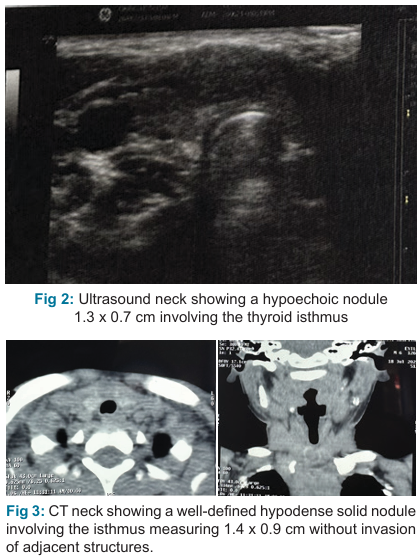
Ovarian serous cystadenofibroma is a rare benign epithelial-stromal tumor, typically presenting as a complex adnexal mass in women aged 15–65. Despite its benign nature, it often mimics malignant ovarian tumors on imaging due to its mixed cystic-solid architecture. We report a case of a 55-year-old multiparous female who presented with lower abdominal pain and fullness. Clinical and radiological evaluation revealed a large, complex left adnexal mass. Imaging features on magnetic resonance imaging (MRI), including low T2-weighted signal intensity, suggested a benign fibrous lesion. The patient underwent total abdominal hysterectomy with bilateral salpingectomy and left oophorectomy. -
When Nutritional Deficiency Mimics Systemic Illness: A Rare Case of Vitamin B12-Induced Pancytopenia in Late Pregnancy
Manish M
Cytopenias during pregnancy present a diagnostic dilemma due to the physiological changes of gestation and the broad spectrum of potential causes. While anemia is common, the occurrence of bicytopenia or pancytopenia is rare and can mimic life-threatening conditions such as HELLP syndrome, aplastic anemia, and hematologic malignancies. [1,2] However, nutritional deficiencies, particularly of vitamin B12, remain a significant but often overlooked cause. -
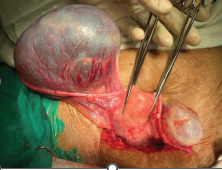
A Massive Uterine Fibroid: When Benign Turns Bizarre
Shraddha Rathod, Amrita Jainl
Leiomyoma, also known as fibroid are characteristic benign tumors that usually arise in the uterus. They are structurally made of the smooth muscle fibers of the uterine wall and are firm, well-demarcated shows whorled pattern. Incidence increases during the reproductive age and decreases after menopause. The presentation and clinical features of uterine fibroids depend on the size and location.
-
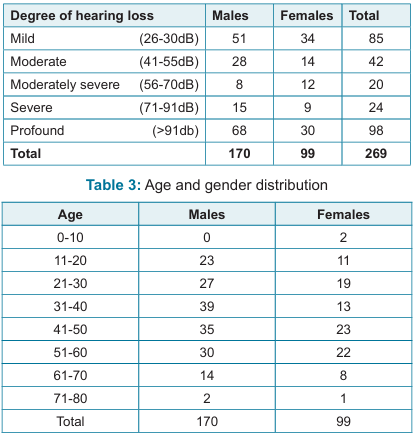
Demographic profile of Head and Neck Malignancy in Northeast India: A Retrospective study.
Siddharth Manoj ,Advait Bhuran, Rashmi Hansdah, Vidhu Sharma, Sarbesh Tiwari, Kapil Soni , Amit Goyal
Otosclerosis is a progressive disease causing stapes fixation and conductive hearing loss. While tympanometry and high-resolution computed tomography (HRCT) are commonly used for diagnosis, their accuracy varies. This study evaluates the diagnostic performance of these modalities individually and in combination, using intraoperative findings as the reference standard -
Complex Retained Ballistic Foreign Bodies of the Nasopharynx and Ethmoid Sinus: A Two-Case Series and Review
Siddharth Manoj ,Advait Bhuran, Rashmi Hansdah, Vidhu Sharma, Sarbesh Tiwari, Kapil Soni , Amit Goyal
Otosclerosis is a progressive disease causing stapes fixation and conductive hearing loss. While tympanometry and high-resolution computed tomography (HRCT) are commonly used for diagnosis, their accuracy varies. This study evaluates the diagnostic performance of these modalities individually and in combination, using intraoperative findings as the reference standard -
Evaluating the Diagnostic Accuracy of Tympanometry and High-Resolution Compute Tomography (HRCT) in Otosclerosis: A Retrospective Comparative Study
Siddharth Manoj ,Advait Bhuran, Rashmi Hansdah, Vidhu Sharma, Sarbesh Tiwari, Kapil Soni , Amit Goyal
Otosclerosis is a progressive disease causing stapes fixation and conductive hearing loss. While tympanometry and high-resolution computed tomography (HRCT) are commonly used for diagnosis, their accuracy varies. This study evaluates the diagnostic performance of these modalities individually and in combination, using intraoperative findings as the reference standard -
Evaluating the Diagnostic Accuracy of Tympanometry and High-Resolution Compute Tomography (HRCT) in Otosclerosis: A Retrospective Comparative Study
Siddharth Manoj ,Advait Bhuran, Rashmi Hansdah, Vidhu Sharma, Sarbesh Tiwari, Kapil Soni , Amit Goyal
Otosclerosis is a progressive disease causing stapes fixation and conductive hearing loss. While tympanometry and high-resolution computed tomography (HRCT) are commonly used for diagnosis, their accuracy varies. This study evaluates the diagnostic performance of these modalities individually and in combination, using intraoperative findings as the reference standard
-
Evaluating the Diagnostic Accuracy of Tympanometry and High-Resolution Compute Tomography (HRCT) in Otosclerosis: A Retrospective Comparative Study
Siddharth Manoj ,Advait Bhuran, Rashmi Hansdah, Vidhu Sharma, Sarbesh Tiwari, Kapil Soni , Amit Goyal
Otosclerosis is a progressive disease causing stapes fixation and conductive hearing loss. While tympanometry and high-resolution computed tomography (HRCT) are commonly used for diagnosis, their accuracy varies. This study evaluates the diagnostic performance of these modalities individually and in combination, using intraoperative findings as the reference standard -
Evaluating the Diagnostic Accuracy of Tympanometry and High-Resolution Compute Tomography (HRCT) in Otosclerosis: A Retrospective Comparative Study
Siddharth Manoj ,Advait Bhuran, Rashmi Hansdah, Vidhu Sharma, Sarbesh Tiwari, Kapil Soni , Amit Goyal
Otosclerosis is a progressive disease causing stapes fixation and conductive hearing loss. While tympanometry and high-resolution computed tomography (HRCT) are commonly used for diagnosis, their accuracy varies. This study evaluates the diagnostic performance of these modalities individually and in combination, using intraoperative findings as the reference standard -
Evaluating the Diagnostic Accuracy of Tympanometry and High-Resolution Compute Tomography (HRCT) in Otosclerosis: A Retrospective Comparative Study
Siddharth Manoj ,Advait Bhuran, Rashmi Hansdah, Vidhu Sharma, Sarbesh Tiwari, Kapil Soni , Amit Goyal
Otosclerosis is a progressive disease causing stapes fixation and conductive hearing loss. While tympanometry and high-resolution computed tomography (HRCT) are commonly used for diagnosis, their accuracy varies. This study evaluates the diagnostic performance of these modalities individually and in combination, using intraoperative findings as the reference standard